Biochemical Methane Potential (BMP) is a biological test to evaluate the economic value of
feedstock through its potential for methane/biogas generation with anaerobic
digestion. It can also indicate the presence of inhibitory substances in the feed.
The equivalent test, residual biogas potential (RBP), is now a certified method to
assess the quality of digestate after AD in the UK.
Every test builds a cumulative yield curve for each reactor. Comparing them shows which feedstock is worth the most, while a curve that flattens earlier than expected is often the first sign of an inhibitory substance. The chart below is a real BMP Nautilus run rather than an illustration — four food wastes, each in triplicate, over fifteen days.
Croissant
White sugar
Butter
Sludge control
Real data from a BMP Nautilus run — four feedstocks, each in triplicate.
Why BMP Nautilus?
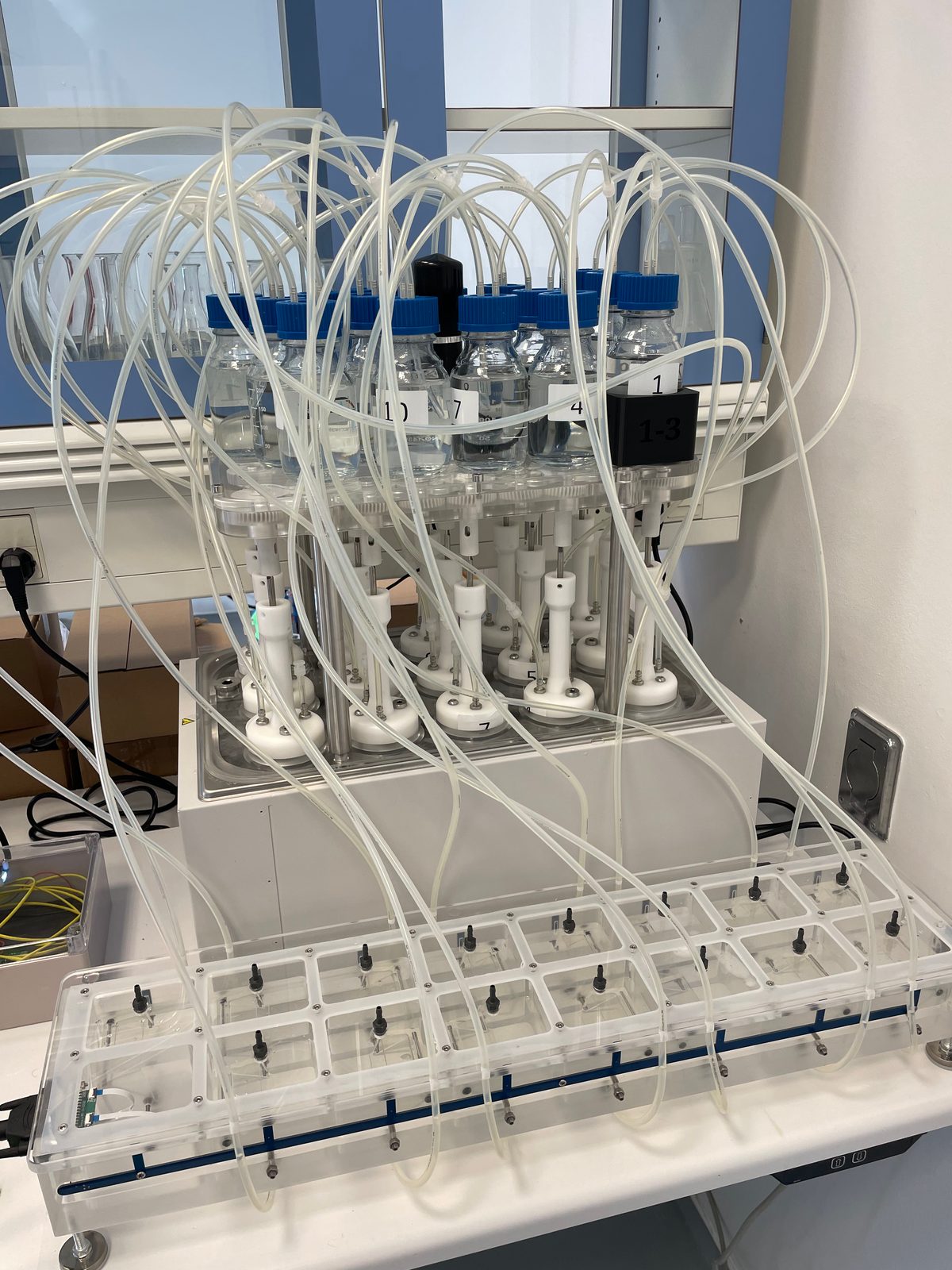
1 L reactorsLarge volumes reduce the influence of small sampling variations.
Covered water bathLess evaporation during longer tests.
One 20 rpm driveConsistent mixing across all 15 positions.
Results at standard conditionsTemperature and pressure readings convert gas volumes automatically.
Ready to runEasy to operate, with the data logger and software included.
Applications
Determine biomethane yield of substrates
Measure what a feedstock is worth before it goes anywhere near the digester.
Screen inhibitors and toxic materials
Catch substances that suppress digestion in a 1 L reactor, not a full-scale plant.
Evaluate residual biogas potential (RBP) of digestate
Quantify the gas left in digestate — the certified UK measure of AD quality.
Assess the effects of pre-treatment on feedstocks
Run treated and untreated material side by side to see what the extra step buys.
Discover the set
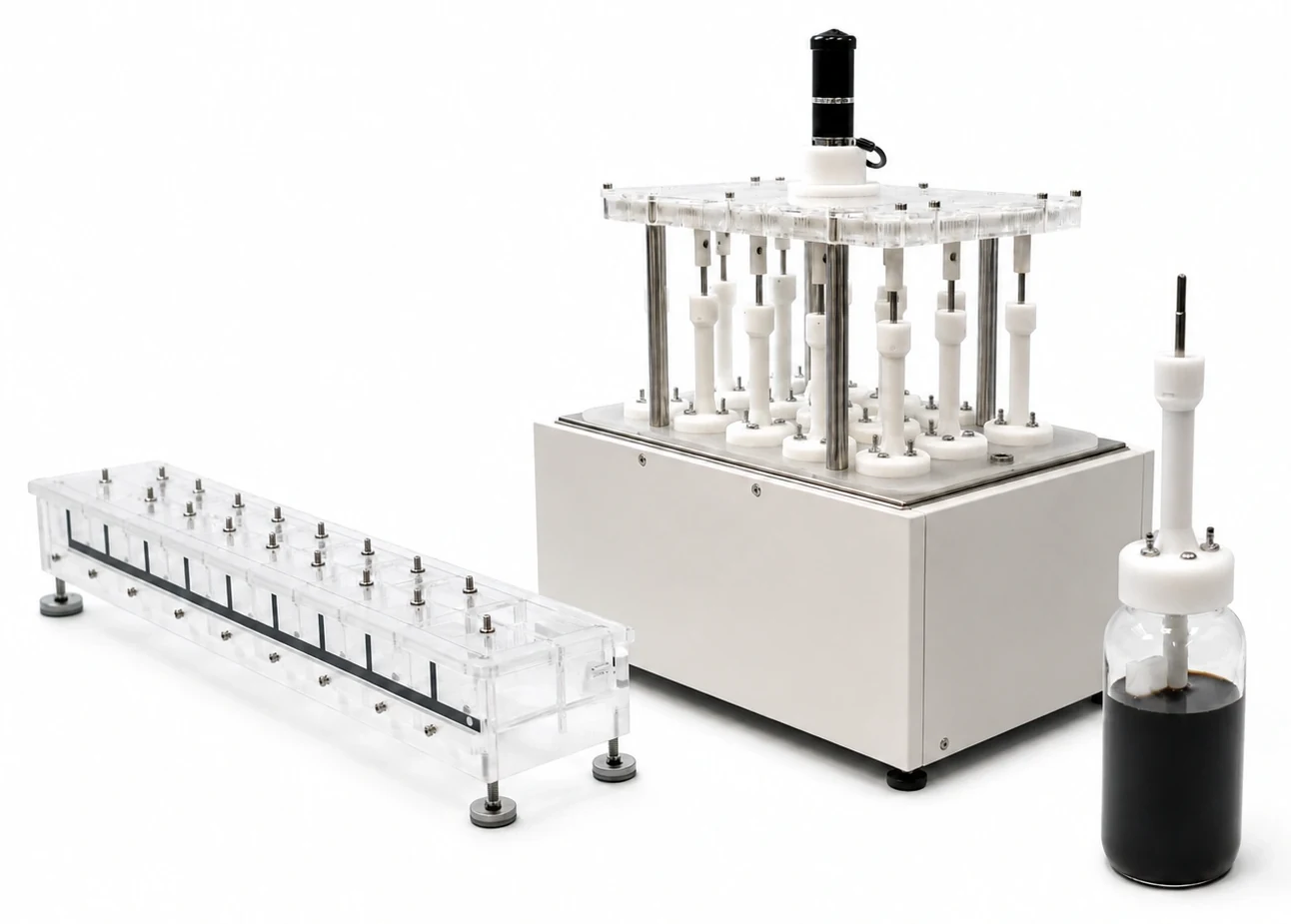
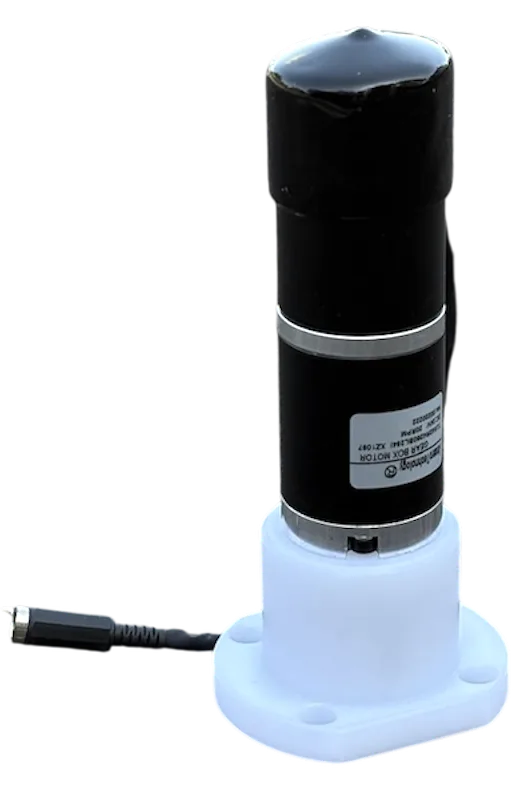
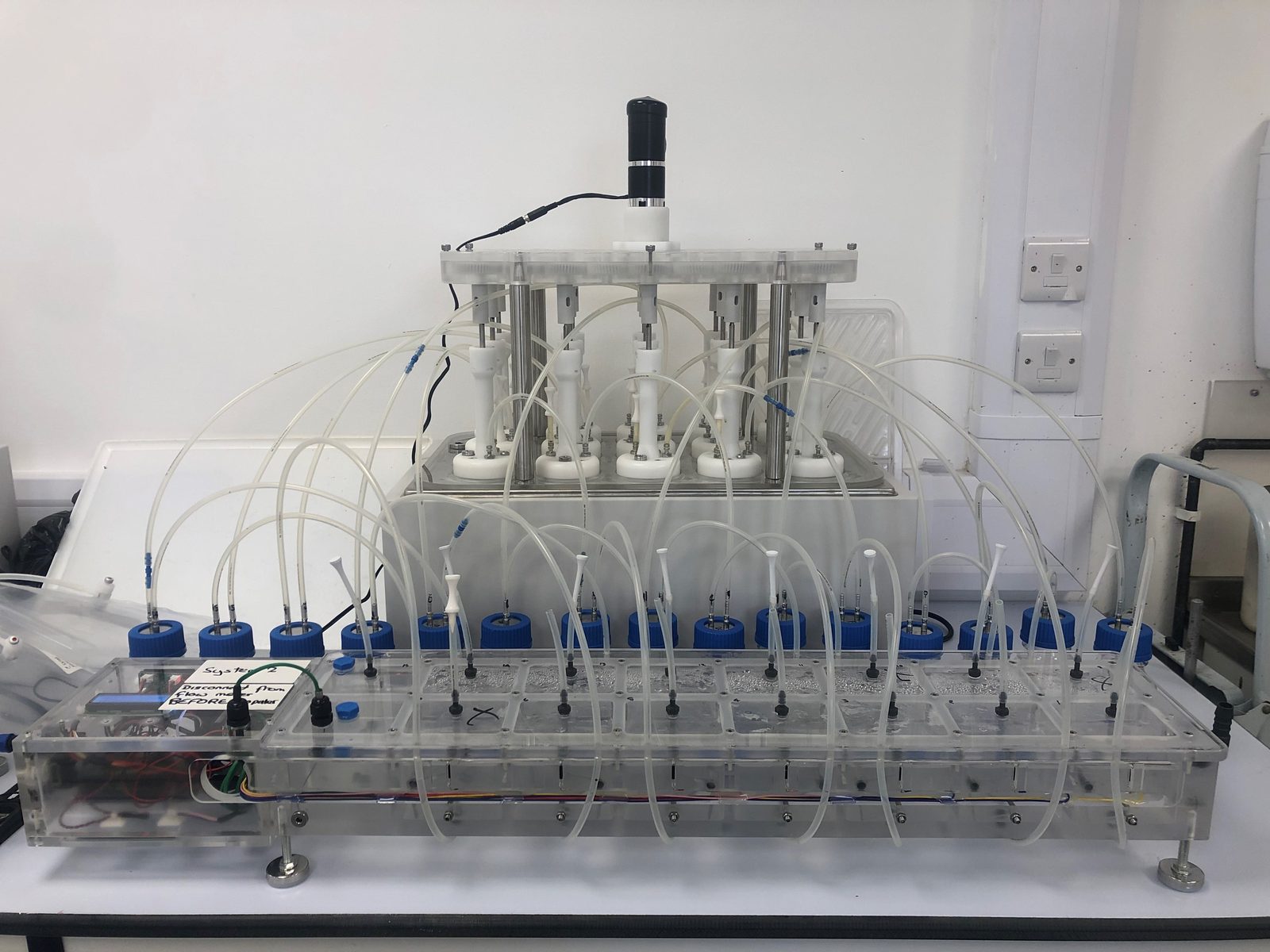
20 RPM Motorpowers the mixing inside all the reactors
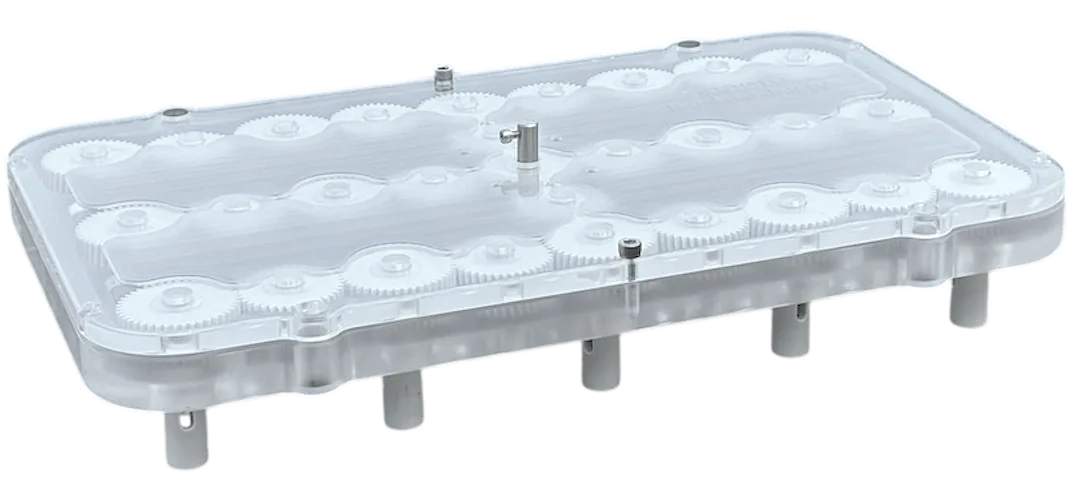
Patented Gearboxlets one motor mix all 15 reactors consistently
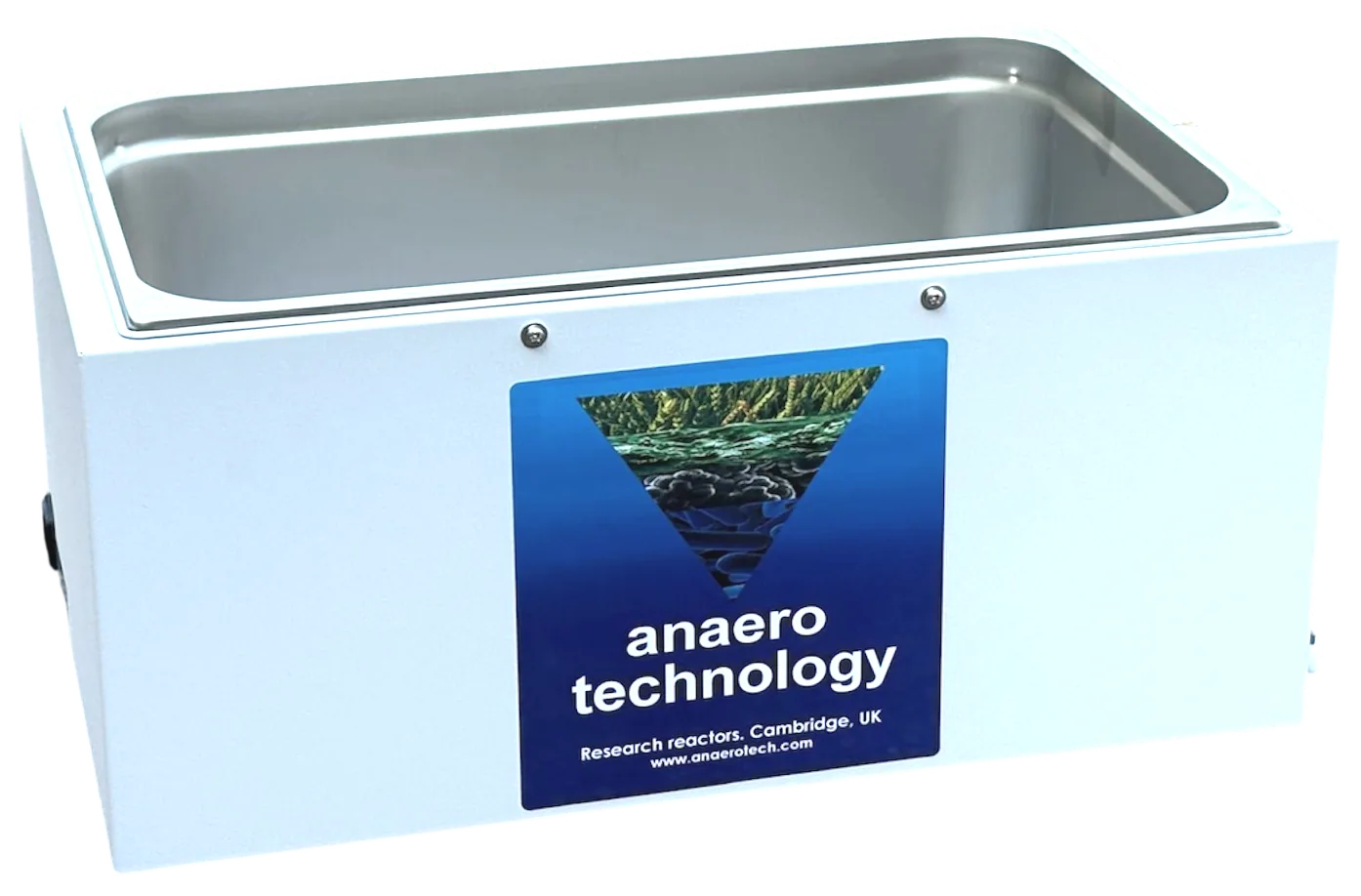
Water Bath Lidstops water evaporating from the bath
Water Bathholds temperature from ambient up to 85°C
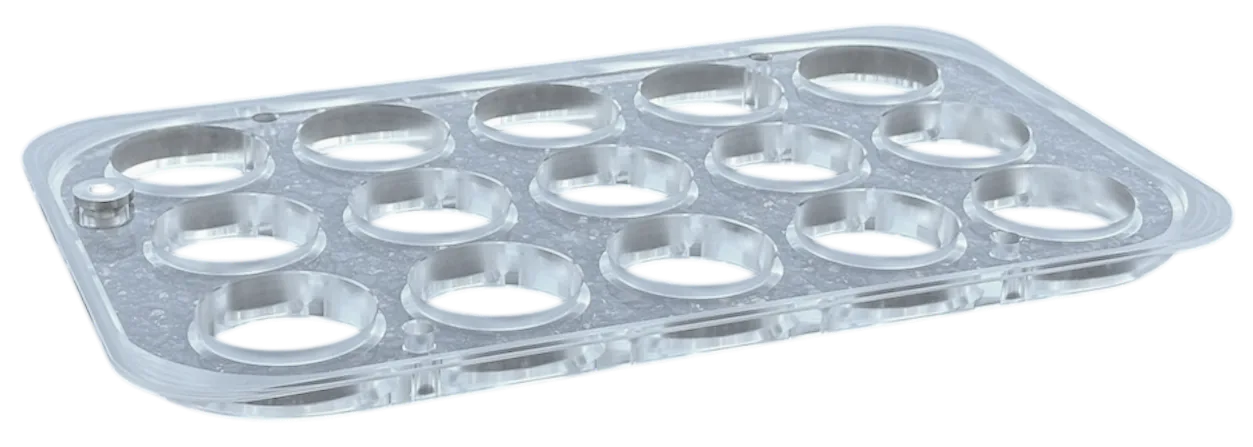
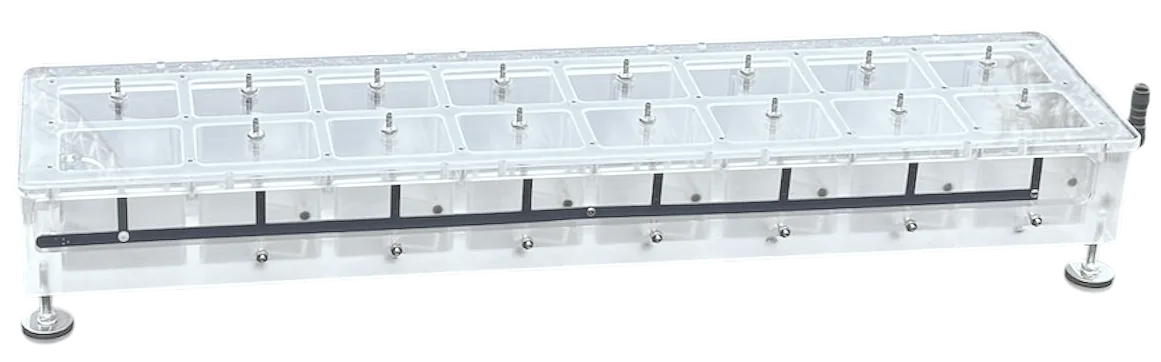
15-cell Gas Flow Metermeasures gas in ~10 ml increments
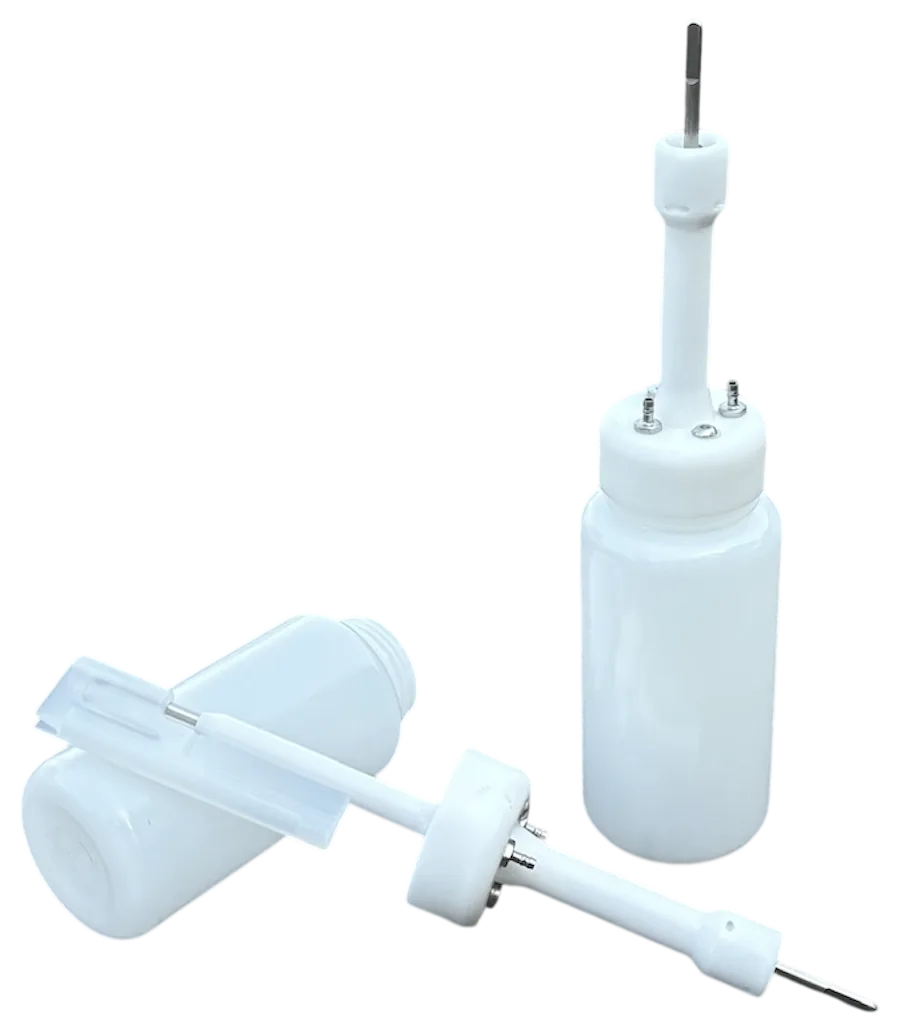
15x 1L HDPE Reactorlarge volume limits the impact of small deviations
Client Stories
“We actually considered building a system ourselves, but we are very happy that we chose to buy from Anaero instead. There is much more work involved in constructing your own system than initially seems.”
“We have found that the difference between varieties — which may yield and look identical in the field — can result in a 60–70 m³ difference in gas potential at feed-in time.”
A biochemical (or biomethane) methane potential test measures how much methane or biogas a material can produce by anaerobic digestion. A known amount of sample is mixed with an active inoculum at a set inoculum-to-substrate ratio, based on volatile solids (VS). Gas is measured until production stops and reported per gram of VS at standard conditions. The shape of the curve also shows whether something in the sample is slowing digestion down.
What is VDI 4630?
VDI 4630 is the German engineering guideline for fermentation of organic materials, published by the Association of German Engineers (VDI); the current edition dates from 2016. It sets out how to characterise and sample substrates and how to run batch fermentation tests such as BMP tests, so results from different labs can be compared. Its main points include an inoculum-to-substrate ratio of at least 2 on a volatile solids basis, replicate reactors, inoculum-only blanks, microcrystalline cellulose as a reference substrate to check the inoculum, mesophilic or thermophilic incubation, gas volumes reported at standard conditions, and running the test until gas production has levelled off.
How many samples can I test at once?
The BMP Nautilus has 15 reactors. A typical run uses three for blanks (inoculum only) and three for a positive control such as microcrystalline cellulose, leaving nine for three samples in triplicate. If your controls run in another set, you can test five samples in triplicate.
How long does a BMP test take?
It depends on the material. Readily degradable food wastes often level off within about two weeks, as in the run shown above, while fibrous material can take six weeks or more. A common rule is to stop once daily gas production has stayed below 1% of the cumulative total for three days in a row.
Does it measure methane or total biogas?
Either. Fill the gas flow meter with acidified or distilled water to count total biogas, or with a caustic solution that absorbs CO₂ so only methane is counted.
Are results corrected to standard conditions?
Yes. A temperature sensor in the flow meter and a barometer in the data logger let it convert every reading to standard temperature and pressure (273.15 K, 101.325 kPa) automatically, so results are comparable with published BMP values.
Can I follow VDI 4630 or the Holliger et al. (2016) recommendations?
Yes. Fifteen reactors give room for triplicates, blanks and a positive control; the water bath holds the temperature, every reactor is mixed at the same speed, and gas volumes are reported at standard conditions. You choose the inoculum, ratio and test length to suit the method you follow.
Can I use it for residual biogas potential (RBP) of digestate?
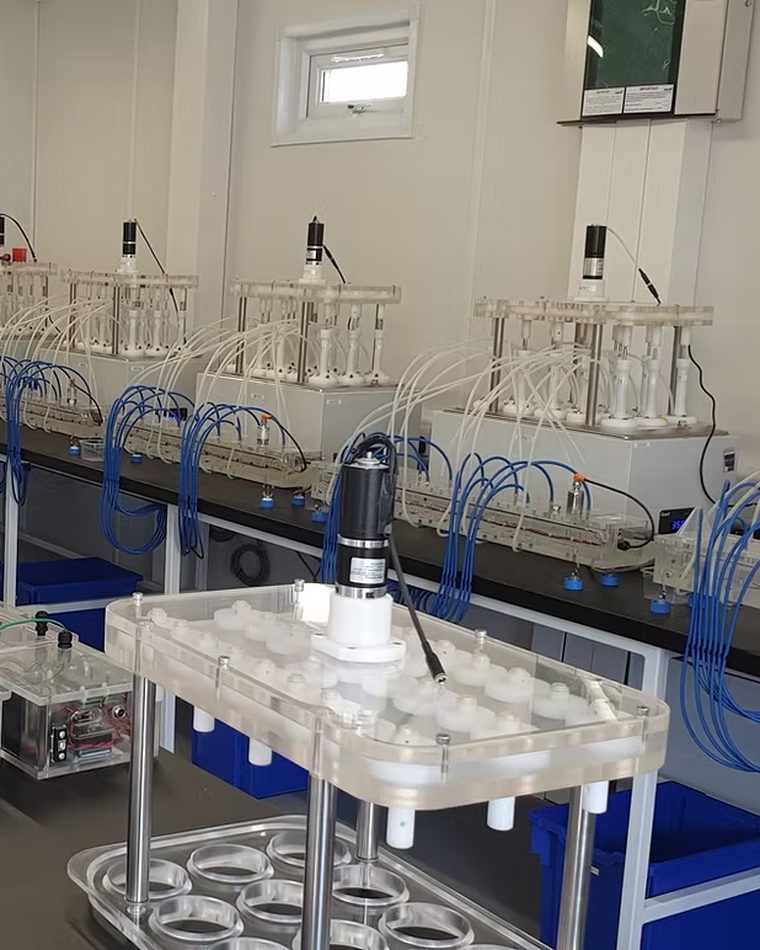
Yes. RBP is the UK test for digestate stability, described in WRAP report OFW004-005, and runs on the same equipment as a BMP test. SUEZ runs both BMP and RBP tests on eight BMP Nautilus sets.
Can I sample or add to the reactors during a test?
Yes, with optional gas-tight access ports. You can measure pH, redox or VFA, or add a supplement, without opening the reactor or interrupting gas measurement.
What happens in a power cut?
The gas flow meter and data logger have battery backup for up to 15 hours, so gas counts are not lost while the power is off.
Can it run thermophilic tests?
Yes. The water bath runs from ambient temperature up to 85 °C, and its fitted lid keeps evaporation low even at thermophilic temperatures such as 55 °C.
Your enquiry
May we use Google cookies to see which of our ads lead to enquiries? Nothing is used for advertising profiles. Privacy notice