
Anaerobic digestion test protocols
The standard laboratory tests used in anaerobic digestion research, what each one tells you, how it runs and which Anaero instruments carry it out. Our team has in-depth experience and knowledge of these protocols, and can help you choose and adapt the right one for your research question.
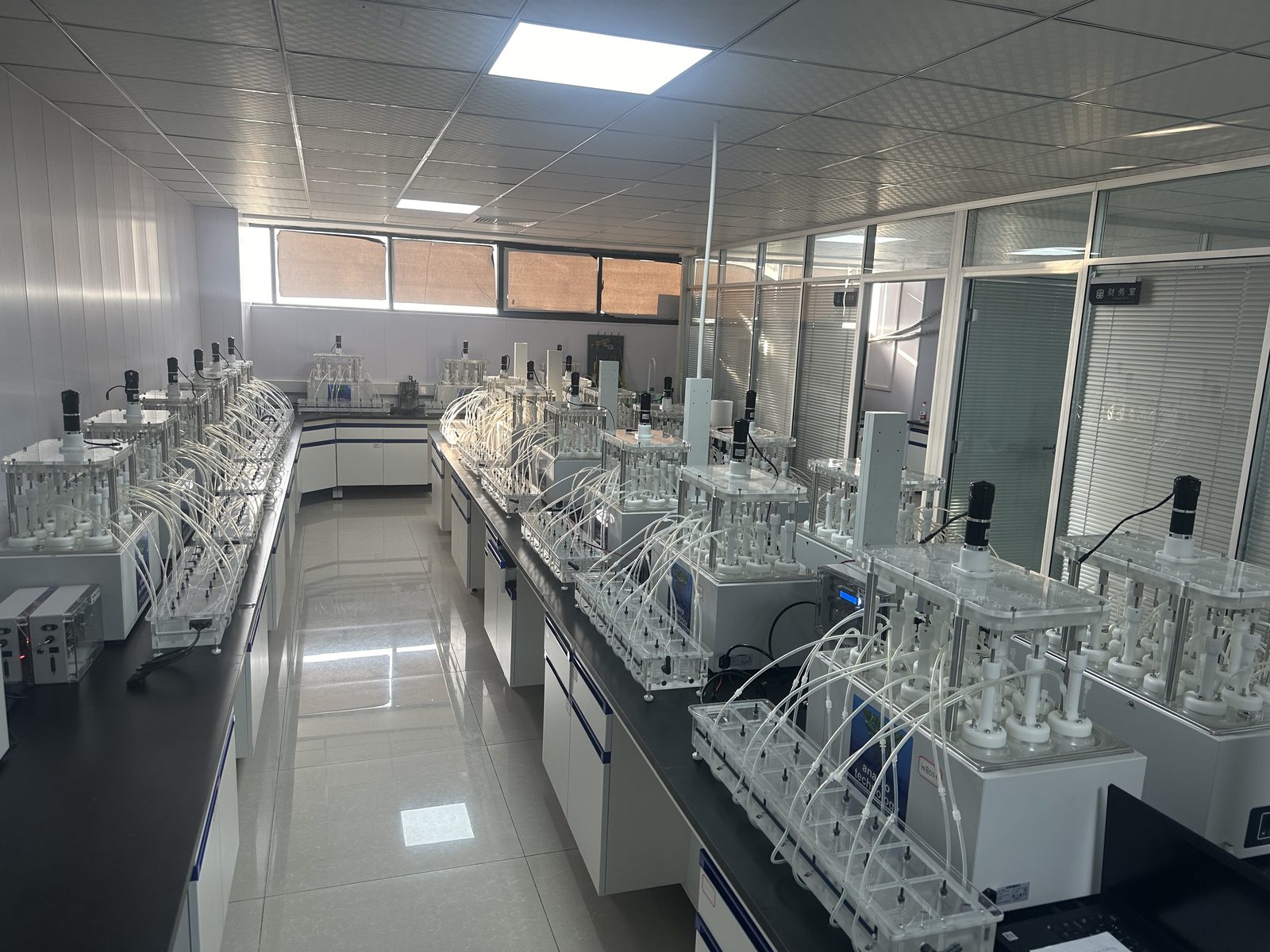
Batch tests
Batch tests digest a single dose of material with an active inoculum and follow gas production until it levels off. They are quick to set up, run many samples side by side and are the basis of most feedstock comparisons.
Biochemical methane potential (BMP)
VDI 4630 · Holliger et al. (2016)
How much methane a feedstock can produce: the basic measure of its value for anaerobic digestion.
- How it runs
- Sample and active inoculum at an inoculum-to-substrate ratio of at least 2 (VS basis), in triplicate, with inoculum-only blanks and a microcrystalline cellulose control, typically at 37 °C until gas production levels off.
- What you get
- Cumulative methane or biogas yield in NmL per g VS, plus the full production curve.
Residual biogas potential (RBP)
PAS 110 digestate stability · WRAP OFW004-005
How much gas is still left in digestate: the UK measure of digestate stability and of how completely a plant digests its feed.
- How it runs
- Digestate is incubated under mesophilic conditions for a fixed period and its gas production is measured, on the same equipment as a BMP test.
- What you get
- Residual biogas per g VS of digestate, for comparison with the PAS 110 limit.
Anaerobic inhibition and toxicity
Based on ISO 13641-1
Whether a material, additive or contaminant slows or stops digestion, and at what concentration.
- How it runs
- A readily degradable substrate is digested with increasing doses of the test material alongside undosed controls. Comparing the curves shows any lag, slower rate or lower total.
- What you get
- The dose at which gas production falls, such as the concentration giving 50% inhibition.
Specific methanogenic activity (SMA)
How active an inoculum or sludge is, before relying on it for BMP tests or to restart a digester.
- How it runs
- Inoculum is fed a simple substrate such as acetate, with the gas flow meter filled with a CO₂-absorbing solution so only methane is counted.
- What you get
- Maximum methane production rate per g VS of inoculum per day.
Co-digestion and pre-treatment screening
Which blend or pre-treatment gives the most gas, and whether mixing feedstocks helps or hinders digestion.
- How it runs
- Several blend ratios, or treated and untreated material, run side by side under identical conditions in the same water bath.
- What you get
- Directly comparable yields and rates, including any synergy between feedstocks.
Continuous and semi-continuous tests
A batch test shows what a feedstock could give; a regularly fed reactor shows how a digester actually behaves on it over weeks, as the microbial community adapts and inhibitors accumulate. These tests are how laboratory results are carried over to full-scale plants.
Organic loading rate and retention time trials
How hard a digester can be fed on a given feedstock before it becomes unstable, and the retention time it needs.
- How it runs
- Reactors are fed at a set organic loading rate (OLR) and hydraulic retention time (HRT), automatically or by hand, and the loading is stepped up once the process is stable at each level. Gas production, gas composition, pH and VFAs are tracked throughout.
- What you get
- Specific methane yield and stability at each loading rate, and the highest OLR the process tolerates.
Long-term feedstock and stability trials
How a new feedstock, or a change of recipe, affects a digester over several retention times, including slow effects such as ammonia build-up or trace element depletion.
- How it runs
- Reactors seeded with the plant’s own inoculum are fed the plant’s current diet, then switched to the new feedstock or recipe while a control reactor continues unchanged.
- What you get
- A side-by-side record of gas yield, composition and process indicators, showing whether the change is safe to make at full scale.
Additive and trace element trials
Whether an additive, enzyme, trace element mix or ammonia binder improves yield or stability under realistic, regularly fed conditions.
- How it runs
- Matched reactors started from the same inoculum are fed the same diet, with the additive dosed to some reactors and not others.
- What you get
- The difference in methane yield and process stability attributable to the additive.
High-solids and fibrous feedstocks
Digestion of materials that are hard to pump, such as straw, grass, silage or manure fibre.
- How it runs
- Manually fed reactors with wide feeding ports take whole or chopped material at high total solids, fed on a semi-continuous schedule.
- What you get
- Methane yield and stability for feedstocks that automatic feeders cannot handle.
Two-stage digestion and fermentation
Separating the acid-forming and methane-forming stages, or stopping before methane is produced at all, opens up hydrogen, volatile fatty acid and other bioproduct research.
Two-stage and multi-stage digestion
Whether separating hydrolysis and acidogenesis from methanogenesis improves yield, stability or hydrogen recovery.
- How it runs
- An acidogenic first stage at short retention time feeds a methanogenic second stage, with each stage controlled and measured independently.
- What you get
- Hydrogen and methane yields from each stage, and the overall performance compared with single-stage digestion.
Fermentation and VFA or hydrogen production
Volatile fatty acid, short-chain fatty acid or hydrogen production by fermentation, including gut-microbiome studies.
- How it runs
- Reactors run under conditions that limit methane production, such as low pH or heat-treated inoculum, with gas logged throughout. Optional access ports allow liquid sampling for VFA analysis.
- What you get
- Gas production over time alongside liquid-phase results from your own analysis.
Gas composition
Gas volume alone does not show how a process is changing. Automated composition measurement adds the methane content and early warnings that gas bags and occasional manual samples miss.
Automated biogas composition monitoring
Methane and carbon dioxide content of every reactor through a test, plus hydrogen sulphide and hydrogen where needed.
- How it runs
- A multi-channel gas analyser connects to the gas line from up to 15 reactors, including other manufacturers’ systems, and switches between channels automatically at flows as low as 40 mL/h.
- What you get
- A composition record for each reactor alongside its gas volume, without gas bags or manual sampling.